
If you feel like you’re fighting a losing battle against your landscape this August—watering like it's your second job with little to show for it—you're not alone. We're in the last of summer heat as temps soar and rain rarely shows. Everyone I talk to is working overtime just to keep their outdoor spaces looking decent, including mine!
Good news: it's not your fault.
Bad news: there's only so much more you can squeeze out of this month.
My own garden is just as thirsty as yours. That lush April-through-June green is officially behind us, and we're all trying to survive the last stretch of summer.
Is there hope? Of course and always.
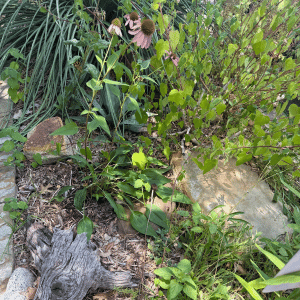
A few flowers in my yard despite the scorching August heat.
Here's what I suggest to my clients when the August heat hits:
1. Accept the season. There's real beauty in watching a garden weather a hard stretch—it's a lesson in resilience as much as it's a lesson in landscaping. Plants move through seasons the same way we do: growth, struggle, rest, and back around again. Learning to be gentle with a garden going through a rough patch, instead of panicking over it, is part of gardening the same way patience is part of most things worth doing. Trust that most established, in-ground native plants can handle Texas heat far better than we give them credit for, especially with access to groundwater and cooler soil below the surface.
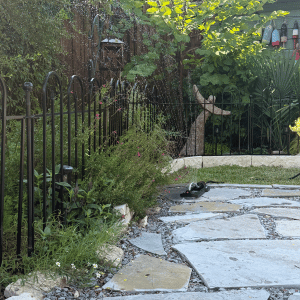
Don’t overthink it — a simple hose sprinkler is perfect for your plants that need a bit more support.
2. Water strategically, not constantly. Your garden may not be at its prettiest, but that doesn't mean it's calling it quits. Water early morning (or evening, if you must) and focus your effort on your youngest plants and anything above ground — pots, raised beds, containers. Heading out of town? We can help keep an eye on your gardens & watered while you're gone. Reach Out Here!
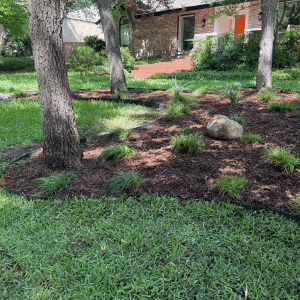
Mulch can be a creative way to add variety to landscapes.
3. Make friends with mulch. With planting on pause until fall, August is the perfect time to add more mulch if you didn’t get a chance to mulch this past Spring. It suppresses weeds, insulates roots, and slows evaporation on brutal, sunny days.
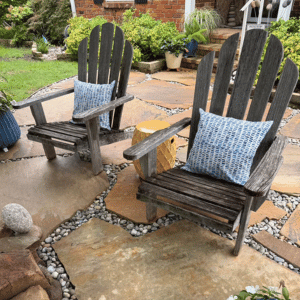
Don’t forget about the non-living elements in your landscape design. Hardscapes can be a great investment that requires little annual upkeep once installed.
4. Tackle hardscaping while you wait for planting season. Just because your plants need a break doesn't mean your landscaping goals do. Late summer is perfect for booking a dry creek bed or a flagstone patio installation while our crew still has room on the calendar before fall planting season. Reach Out Here!
5. Bonus: if you're adding plants, go native. Low-maintenance, drought-tolerant native plants add color without adding to your water bill. Plus, most double as pollinator magnets heading into fall. My go-tos this time of year: Sages & Salvias, Red Yucca, and a few pots of Hibiscus or Pentas to mix it up.
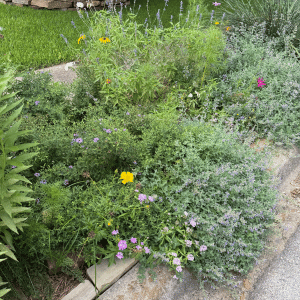
I love this bed of native plants that gives both texture and height to the landscape—pollinators love it, too!
Don't despair over a garden toughing out the last of summer. A little patience now, paired with fall prep, sets you up for a landscape you can actually relax into once cooler weather arrives. Fellow Texas gardeners, what am I missing? Send me your tips.
Grow With Love,
Hilary